

No Results Found.
The page you requested could not be found. Try refining your search, or use the navigation above to locate the post.
The page you requested could not be found. Try refining your search, or use the navigation above to locate the post.
$variable({u0022typeu0022:u0022contentu0022,u0022valueu0022:{u0022nameu0022:u0022loop_menu_descriptionu0022,u0022settingsu0022:{u0022beforeu0022:u0022u0022,u0022afteru0022:u0022u0022,u0022loop_positionu0022:u0022u0022}}})$
$variable({u0022typeu0022:u0022contentu0022,u0022valueu0022:{u0022nameu0022:u0022loop_menu_descriptionu0022,u0022settingsu0022:{u0022beforeu0022:u0022u0022,u0022afteru0022:u0022u0022,u0022loop_positionu0022:u0022u0022}}})$
$variable({u0022typeu0022:u0022contentu0022,u0022valueu0022:{u0022nameu0022:u0022loop_menu_descriptionu0022,u0022settingsu0022:{u0022beforeu0022:u0022u0022,u0022afteru0022:u0022u0022,u0022loop_positionu0022:u0022u0022}}})$

- 09. December 2025
Image editing has shifted the boundaries between reality and interpretation – especially in nature photography. While minor corrections compensate for technical limitations, excessive interventions or AI elements can distort the authenticity of a moment. Ethical work means showing nature honestly and telling its stories unaltered. Despite technological developments, truthfulness, respect, and photographic integrity remain crucial for establishing a genuine connection between the viewer and nature.

Julius Kramer
Wildlife Photographer & Conservationist
Image editing has challenged our most fundamental assumptions about photographic representation. A new technology now makes it possible to model the lighting of a shot in 3D retrospectively, transforming a portrait from harsh midday light into a softly lit evening scene. In the world of nature photography, we therefore face a dilemma.
In fact, in some competitions, about 22 percent of all submissions are rejected by the jury – "due to excessive digital editing." Especially in times of AI image editing, we must ask ourselves where the line lies. While images, as powerful tools, often convey information faster and more intensely than words, in nature photography we bear a special responsibility for authenticity. For me, capturing the beauty of nature does not mean creating a perfect illusion, but preserving the truthfulness of the moment – yet with room for technical optimizations. In this article, we examine the balance between creative editing and photographic integrity in nature and wildlife photography.
The manipulation of nature photographs is almost as old as photography itself. As early as the 19th century, architectural photographer Édouard Baldus used montage techniques to make his images appear more realistic. In earlier times, it was even common to photograph stuffed animals in the morning mist. These practices were accepted then, even though they distorted reality.
In the analog era, we developed films in darkrooms and influenced the result through chemicals, paper choice, and exposure techniques. We used small cardboard stencils for "dodging" to selectively lighten image areas – the precursors of today's digital tools.
Of course, there are limits. The German Society of Nature Photographers (GDT) emphasizes that while digital montages are established in other photographic genres, they remain undesirable in nature photography. Correct declaration is paramount: photographing a lynx in a zoo is not a problem, as long as I do not claim to have photographed it in the wild.
The shift from analog to digital development has expanded my possibilities. Nevertheless, the crucial question remains: Where does manipulation begin? Is the use of a polarizing filter or the adjustment of color saturation already a distortion? The art of nature photography lies in authentically transferring three-dimensional reality into a two-dimensional snapshot.

Fototouren & Workshops
Gemeinsam verfeinern wir deine fotografischen Fähigkeiten — in kleinen Gruppen, mitten in der Wildnis. Sichere dir deinen Platz und entdecke die Magie von Licht und Natur neu.
Kleine Gruppen · 20+ Jahre Erfahrung

Technological advancements have fundamentally changed image editing in nature photography. Artificial intelligence can now create photorealistic animal images that are almost indistinguishable from real photographs for laypeople. However, AI often alters crucial species-specific characteristics – such as the number and position of legs, coloration patterns, or body proportions.
Many errors occur particularly with animal species for which little image material is available on the internet. For example, AI can depict dragonflies with unnaturally long antennae or peacock chicks with iridescent plumage, even though they are brown in nature. These distortions lead to a false perception of the natural world.
In addition, there are, of course, legitimate applications: AI-based noise reduction or the removal of distracting elements like fences can improve image quality without compromising authenticity.
As a nature photographer, I draw clear lines: I only correct what was lost due to technical limitations – such as details or natural color moods. Replacing a gray sky with a sunset or adding AI-generated animals, however, has nothing in common with nature photography. Authenticity remains the decisive value – especially in times when natural history knowledge is dwindling and species extinction is dramatically progressing.
Authenticity forms the core of nature photography. In a world where a deer suddenly appears in a field with a click, or a dreary sky is replaced by a sunset, we as nature photographers must define our ethical guidelines.
Especially in times of AI image editing, the line between reality and fiction is increasingly blurring. Nevertheless, the responsibility lies with us to maintain an honest approach to our images.
The fundamental question is not whether editing is technically possible, but whether it serves the truth of the moment.
While minor adjustments such as contrast or color corrections are acceptable, profound manipulations or AI-generated elements lead to a distorted perception of the natural world. Every nature photographer bears a special responsibility for nature. Only by preserving authenticity can nature photography retain its unique value as a bridge between humans and wild nature.
Ultimately, as nature photographers, we walk a fine line between artistic vision and documentary truth. The digital revolution has undoubtedly expanded our creative possibilities, but it has also blurred the boundaries between reality and fiction.
For me, nature photography therefore means capturing the beauty of the moment without distorting it. Although technical aids can improve image quality, authenticity remains the most valuable asset of my work. Undistorted nature images create a unique connection between the viewer and wild nature – they tell true stories, evoke emotions, and foster respect for our environment.
Technology will undoubtedly continue to evolve and raise new ethical questions. Nevertheless, the basic principles remain: honesty, respect for nature, and photographic integrity. Only by preserving these values can nature photography fulfill its important role as an authentic window to the natural world and inspire people to protect this precious world.

Experiences
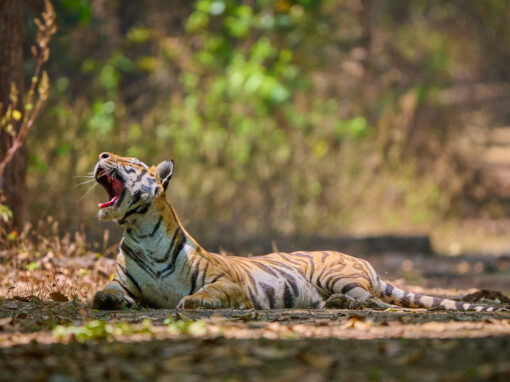
No phone ringing. No jeep traffic jams. No Instagram Reels. In India’s tiger reserves, rules are in place to protect the forest –
not to entertain tourists. An experience report from Kanha National Park on sustainable nature tourism, strict safari rules, and why Africa could learn from it.
Experiences
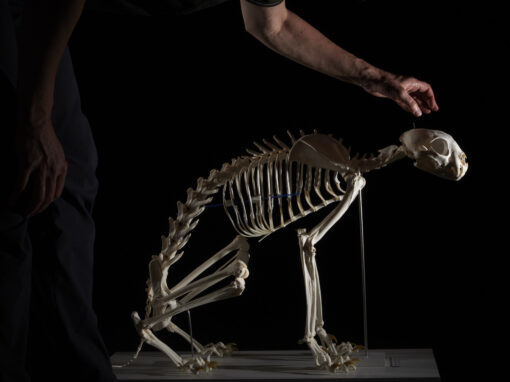
In Bavaria, at least 14 lynx disappeared under unexplained circumstances. Wildlife crime is not a distant problem—it happens in our forests. About poisoned baits, failing law enforcement, and the power of a single image.
Blog
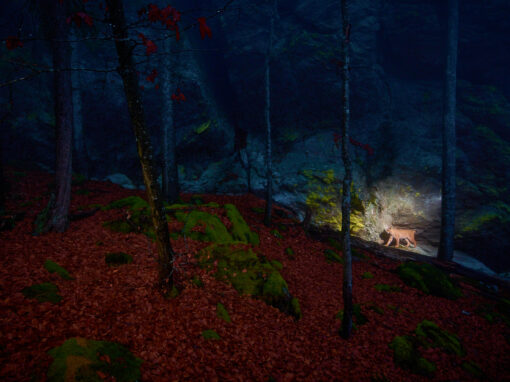
A male lynx roams his territory near Großer Arber in the November twilight—and wins the “The World of Mammals” category at Glanzlichter der Naturfotografie 2026. The story behind the image.
Experiences
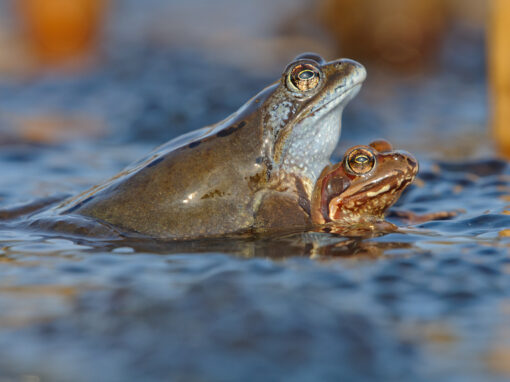
Hand on heart: who voluntarily lies flat in the forest mud during the day at three degrees and drizzling rain? While the world waits for the first cherry blossoms for the perfect Instagram selfie, I prefer to lie where it is brown, damp, and—well—quite uncomfortable. But right here, under the moldy leaves and in the inconspicuous ponds, the most exciting drama of early spring is currently unfolding.
Equipment
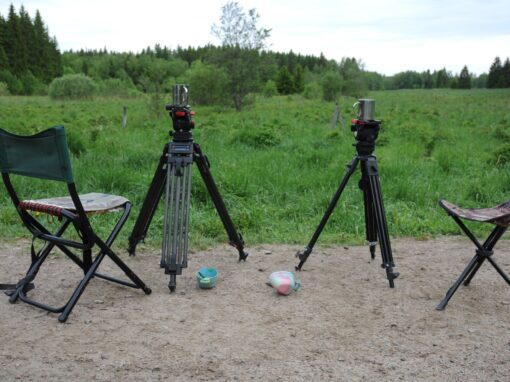
With long focal lengths, “sharpness” is not the problem; it is the tiny movement that prevents sharpness. The longer the focal length, the higher the sensor resolution, and the smaller the time window for correct technique, the less forgiving the system becomes. In practice, it is therefore not about the one perfect, razor-sharp image, but about yield: How many images in a sequence are truly usable, how reproducible is the result, and how quickly are you ready when the subject appears only briefly?
Experiences
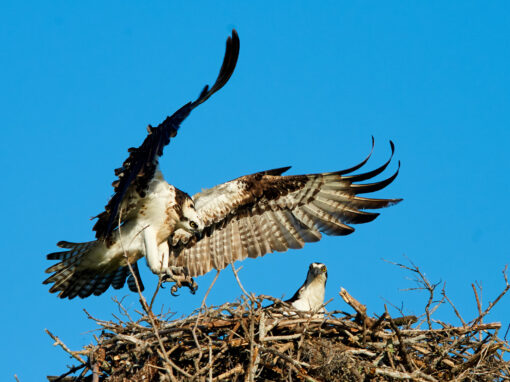
Florida’s winter is peak season for bird photography. In the Everglades, Lake Apopka, the Ding Darling Reserve and Crystal River, migratory birds meet resident species. Herons, pelicans and ibises shape the wetlands—at the center is the osprey. This article shows why Florida is one of the best winter destinations for wildlife photography and how light, landscape and biodiversity work together.
Join my nature photography community and receive exclusive updates directly in your inbox.

Sign up for my newsletter now and be the first to receive exclusive insights, tips, and new dates.