

No Results Found.
The page you requested could not be found. Try refining your search, or use the navigation above to locate the post.
The page you requested could not be found. Try refining your search, or use the navigation above to locate the post.
$variable({u0022typeu0022:u0022contentu0022,u0022valueu0022:{u0022nameu0022:u0022loop_menu_descriptionu0022,u0022settingsu0022:{u0022beforeu0022:u0022u0022,u0022afteru0022:u0022u0022,u0022loop_positionu0022:u0022u0022}}})$
$variable({u0022typeu0022:u0022contentu0022,u0022valueu0022:{u0022nameu0022:u0022loop_menu_descriptionu0022,u0022settingsu0022:{u0022beforeu0022:u0022u0022,u0022afteru0022:u0022u0022,u0022loop_positionu0022:u0022u0022}}})$
$variable({u0022typeu0022:u0022contentu0022,u0022valueu0022:{u0022nameu0022:u0022loop_menu_descriptionu0022,u0022settingsu0022:{u0022beforeu0022:u0022u0022,u0022afteru0022:u0022u0022,u0022loop_positionu0022:u0022u0022}}})$

- 17. April 2026
In Bavaria, at least 14 lynx disappeared under unexplained circumstances. Wildlife crime is not a distant problem—it happens in our forests. About poisoned baits, failing law enforcement, and the power of a single image.

Julius Kramer
Wildlife Photographer & Conservationist
There are mornings in the forest when everything is just right. Light falls obliquely through the beech trees, the ground steams, and somewhere between the trunks a shadow moves. Quietly. Deliberately. Invisible to anyone who has not learned to look. I know this feeling—the moment when the camera's viewfinder becomes a window. When a lynx, a goshawk, a peregrine falcon ceases to be a statistic and becomes an individual.
I photograph animals that hardly anyone gets to see. Lynx gliding silently through beech forests. Goshawks sitting motionless on a branch in the morning light before plunging into a clearing. I do this because I believe: what we do not see, we cannot protect. But there is something I have not said loudly enough for a long time—namely, what happens to these animals when no one is watching. What happens when the forest falls silent. Not because of the season. But because someone made it so.
In Bavaria, between 2015 and 2020, at least 14 lynx disappeared under unexplained circumstances. Fourteen animals. Fourteen complete lives, extinguished—without a trace, silently, without public attention. No outcry, no headlines, no consequences. The animals were there, and then they were not. Some wore GPS collars whose signal suddenly went silent. Others were simply never seen again—not by camera traps, not by researchers, not by hikers.
The lynx is strictly protected in Germany. Anyone who kills one commits a criminal offense under Section 71 of the Federal Nature Conservation Act. In theory, fines and up to five years' imprisonment are possible. In theory. In practice, it looks different: the vast majority of cases are never solved. The perpetrators know this. The authorities know it too. And precisely this certainty—that wildlife crime in Germany is almost never punished—is part of the problem.
Wildlife crime—the illegal persecution, poisoning, and killing of protected wildlife—is not an exotic problem of distant countries. It is not an issue limited to ivory trafficking in East Africa or tiger bones in Southeast Asia. It happens here. In our forests, in our fields, in our low mountain ranges. With our animals. And it happens with a regularity and systematicity that is alarming—and that hardly anyone notices because the victims have no voice and the crimes take place in secret.
disappeared
14+
Lynx in Bavaria between 2015 and 2020 under suspicious circumstances. The actual number is higher—many animals do not wear GPS collars.
solved
5%
of wildlife crime cases in Germany are ever solved. Investigations peter out, evidence is lacking, perpetrators go unpunished.
BNatSchG
Section 71
criminalizes the shooting of strictly protected species—with up to five years' imprisonment. Convictions are nevertheless extremely rare.
Poachers rarely operate spectacularly. There are no night-vision devices, no chases, no Hollywood-worthy drama. The reality is more sober, more cold-blooded—and precisely for that reason so difficult to grasp. The methods of illegal wildlife persecution in Germany are quiet, insidious, and designed to leave no traces. That is exactly what makes prosecution so difficult and the crimes virtually impossible to prove.
The pesticide carbofuran is among the most frequently used poisons in illegal wildlife persecution in Europe. It is highly toxic, odorless and tasteless, and kills within minutes. It has been banned in the EU since 2008—but it continues to circulate on the black market. A single prepared animal carcass, laid out at a forest edge or in a meadow, can be enough to endanger not only the target but an entire local population. Because poisoned baits kill indiscriminately: the lynx that sniffs at the carcass. The red kite that spots it from the air. The fox that finds it. And the dog let off the leash during a walk. There are documented cases in which a single poisoned bait killed dozens of animals—birds of prey, crows, martens, badgers. A chain reaction of death, triggered by one hand and a gram of poison.
Snares and leg-hold traps are banned in Germany but are repeatedly found—in forest areas, at field edges, near poultry farms. These traps kill without distinction: lynx, wildcat, red kite, white-tailed eagle, peregrine falcon. The person setting the trap does not care which species falls into it. In many cases, the traps are placed so that they remain undiscovered for weeks or months. Animals die slowly, agonizingly, over hours or days. And whoever set the trap never comes back—or retrieves the carcass before anyone finds it.
Birds of prey are particularly affected by illegal persecution. In Germany, an estimated several hundred birds of prey and owls are illegally killed every year—by shooting, poisoning, or nest plundering. Those who operate hunting grounds, maintain pigeon lofts, or manage small game sometimes view buzzards, kites, and goshawks as unwanted competition. The result: targeted shootings, destroyed nests, poisoned prey. The red kite is particularly affected—a species for whose global population Germany bears special responsibility, because more than half of all breeding pairs live here. Every illegally killed red kite is not only a loss for the local population but for the entire species.
Case Study
The female lynx "Tessa" was part of a painstakingly established reintroduction project in the Bavarian Forest. Every lynx in this program counts—genetically, ecologically, symbolically. Tessa wore a GPS collar. Researchers tracked her routes, her territory formation, her development. And then, in 2012, her signal stopped.
Later investigations revealed that Tessa was killed by a poisoned deer carcass. The murder weapon was carbofuran—that pesticide banned for years that circulates on the black market and is lethal within minutes. Tessa's death was not an accident. It was not collateral damage. It was calculated. Someone had deliberately laid out the bait—knowing what it would cause.
No one was ever convicted for Tessa's death. No suspect, no proceedings, no punishment. Her death was registered, documented, filed away. And that was it. Tessa became a number in a statistic that hardly anyone reads—and a symbol for everything that goes wrong when wildlife crime is treated as a trivial offense.
If wildlife crime is so clearly punishable—why does so little happen? The answer is an interplay of structural weaknesses, lack of prioritization, and missing expertise. And it begins with an uncomfortable truth: in Germany, nature conservation crime is not treated as serious crime.
It starts with the investigation. When a dead bird of prey is found, the forensic infrastructure to definitively determine the cause of death is often lacking. Not every federal state has specialized laboratories that can detect poisoning. Samples must be secured in time, refrigerated, and sent to the right places—a process that can already fail at the discovery site if the finder does not know what to do. Even when poisoning is proven, the connection to the perpetrator is often missing. Poisoned baits leave no fingerprints. There are no witnesses. The crime takes place in open fields, away from cameras and eyes.
In addition: wildlife crime enjoys no priority with police and prosecutors. Investigators are rarely specialized in environmental crimes. Proceedings are dropped because the evidence is too thin—or because simply no one wants to invest the necessary resources. The result is a cycle of impunity: low clearance rates lead to low risk for perpetrators. Low risk leads to repetition. Repetition leads to habituation. And habituation leads to wildlife crime being normalized—as a regrettable but ultimately unavoidable phenomenon on the margins of society.
The good news: things are moving. Slowly, but noticeably. Two current initiatives directly address the systematic failure of law enforcement—at the European and scientific levels.
EU LIFE Project "wildLIFEcrime"
The new EU-funded project focuses on better networking between authorities, NGOs, and science—across national borders. Goal: to systematically record wildlife crime in Europe for the first time, strengthen cooperation between law enforcement agencies, and increase public visibility. Specifically, databases are being built, training programs for investigators developed, and best practices adopted from countries already further ahead in combating wildlife crime—such as the United Kingdom with its National Wildlife Crime Unit.
Research Project University of Bremen (until 2028)
Why are so few perpetrators punished? Criminologists at the University of Bremen are investigating this question in a large-scale research project. Structural weaknesses are being analyzed at all levels—from initial investigation through the prosecutor's office to sentencing. The project is important because it systematically asks for the first time at which specific points the system fails—and how it can be repaired.
Both projects share a fundamental idea: the problem is not the absence of laws. The laws exist. The problem is their consistent application—and the societal indifference that enables their non-application.

Fototouren & Workshops
Gemeinsam verfeinern wir deine fotografischen Fähigkeiten — in kleinen Gruppen, mitten in der Wildnis. Sichere dir deinen Platz und entdecke die Magie von Licht und Natur neu.
Kleine Gruppen · 20+ Jahre Erfahrung
Laws protect species on paper. Empathy protects them in real life. And empathy does not arise from paragraphs, regulations, or threats of punishment. It arises from encounters—even when these encounters sometimes only take place through an image.
When I photograph lynx with my camera traps—after hours-long snowshoe hikes, with chewed cables and numb fingers—the resulting images are not for decoration. They emerge as documents. As proof that this animal exists. That it lives. That it has a story, a territory, habits, a personality. And that it deserves to have this story told.
Images make numbers human. The number "14 disappeared lynx" is shocking—but it remains abstract. It is a statistic that one takes note of and forgets again. But a photograph of a lynx looking directly into the camera, with those amber eyes, that alert, calm gaze—that is something different. That is real. That creates a connection that no report and no legal text can establish. And from this connection arises something that all the paragraphs in the world cannot force: genuine concern. The feeling that the loss of this animal is unacceptable.
Documentary nature photography is therefore not a romantic hobby and no escape into nature. It is political. It changes perspectives. It gives animals a face that would otherwise only appear as a species name in a Red List. It turns strangers into acquaintances—and we protect acquaintances. This is not a law of nature, but a deeply human truth: we fight for what we know. For what matters to us. And meaning arises through visibility.
"
I photograph for visibility. For empathy. Because an animal that no one knows moves no one—and an animal that moves no one, no one protects.
— Julius
Wildlife crime thrives on invisibility. The most important weapon against it is attention—and the willingness to act when suspicion arises. You do not have to be a biologist or an investigator to make a difference. You just need to know what to look for and what to do.
Have you found a dead or injured wild animal that shows no obvious signs of an accident? A suspicious bait at a forest edge or in a meadow? A trap that should not be there? Nest trees in your area have been felled? Do you suspect that a crime has been committed? Then it could be nature conservation crime—and your action can make the difference.
The most important steps:
The illegal killing of protected animal species is not a trivial offense—and the perpetrators must be held accountable. Every single report helps to identify hotspots, recognize patterns, and enable prosecution. Tatort Natur is a joint project of LBV (Bavarian Association for Bird and Nature Conservation) and the Gregor Louisoder Environmental Foundation and systematically documents all reported cases of nature conservation crime in Bavaria.
Not everyone will become an investigator—but everyone can help ensure that wildlife crime does not remain an invisible crime. Talk about it. Share this article. Support organizations like LBV, the Gregor Louisoder Environmental Foundation, or the Committee Against Bird Slaughter, which work day after day against illegal wildlife persecution. And if you are out in nature with a camera yourself: document what you see. Every image of a living lynx, a breeding red kite, a hunting peregrine falcon is an argument for the protection of these species—and against the silence that protects their killers.

Experiences
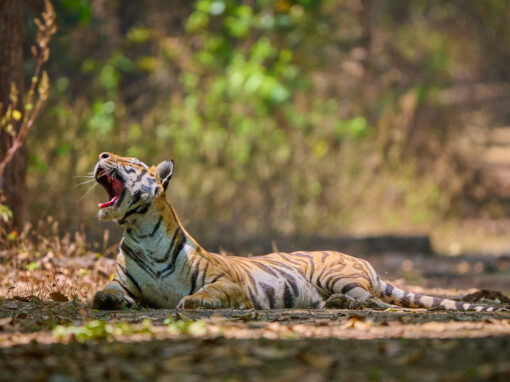
No phone ringing. No jeep traffic jams. No Instagram Reels. In India’s tiger reserves, rules are in place to protect the forest –
not to entertain tourists. An experience report from Kanha National Park on sustainable nature tourism, strict safari rules, and why Africa could learn from it.
Experiences
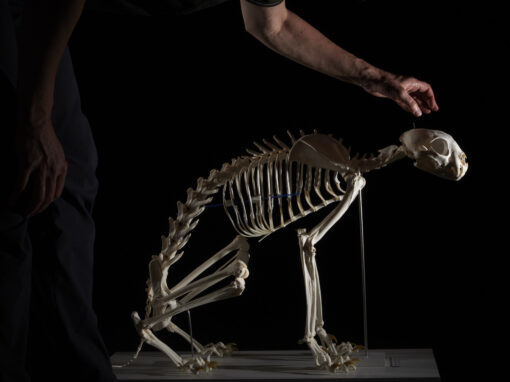
In Bavaria, at least 14 lynx disappeared under unexplained circumstances. Wildlife crime is not a distant problem—it happens in our forests. About poisoned baits, failing law enforcement, and the power of a single image.
Blog
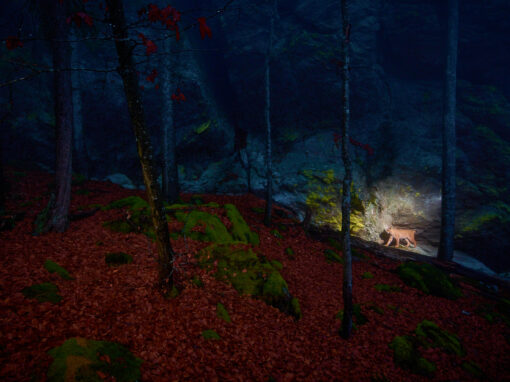
A male lynx roams his territory near Großer Arber in the November twilight—and wins the “The World of Mammals” category at Glanzlichter der Naturfotografie 2026. The story behind the image.
Experiences
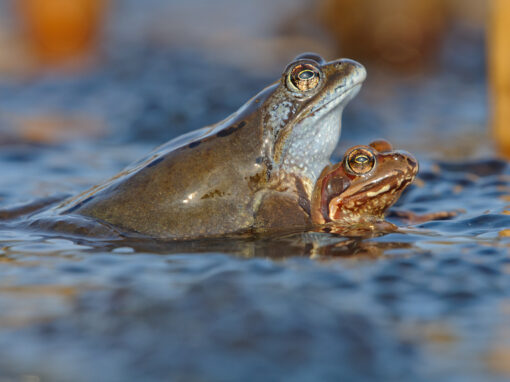
Hand on heart: who voluntarily lies flat in the forest mud during the day at three degrees and drizzling rain? While the world waits for the first cherry blossoms for the perfect Instagram selfie, I prefer to lie where it is brown, damp, and—well—quite uncomfortable. But right here, under the moldy leaves and in the inconspicuous ponds, the most exciting drama of early spring is currently unfolding.
Equipment
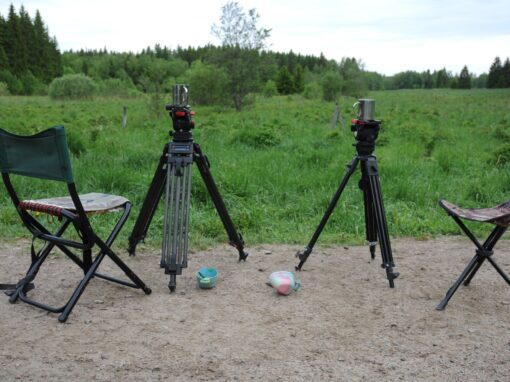
With long focal lengths, “sharpness” is not the problem; it is the tiny movement that prevents sharpness. The longer the focal length, the higher the sensor resolution, and the smaller the time window for correct technique, the less forgiving the system becomes. In practice, it is therefore not about the one perfect, razor-sharp image, but about yield: How many images in a sequence are truly usable, how reproducible is the result, and how quickly are you ready when the subject appears only briefly?
Experiences
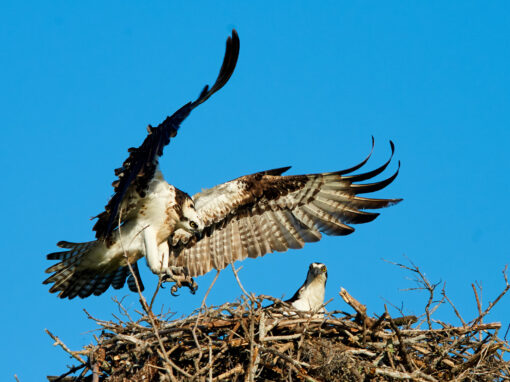
Florida’s winter is peak season for bird photography. In the Everglades, Lake Apopka, the Ding Darling Reserve and Crystal River, migratory birds meet resident species. Herons, pelicans and ibises shape the wetlands—at the center is the osprey. This article shows why Florida is one of the best winter destinations for wildlife photography and how light, landscape and biodiversity work together.
Join my nature photography community and receive exclusive updates directly in your inbox.

Sign up for my newsletter now and be the first to receive exclusive insights, tips, and new dates.