

No Results Found.
The page you requested could not be found. Try refining your search, or use the navigation above to locate the post.
The page you requested could not be found. Try refining your search, or use the navigation above to locate the post.
$variable({u0022typeu0022:u0022contentu0022,u0022valueu0022:{u0022nameu0022:u0022loop_menu_descriptionu0022,u0022settingsu0022:{u0022beforeu0022:u0022u0022,u0022afteru0022:u0022u0022,u0022loop_positionu0022:u0022u0022}}})$
$variable({u0022typeu0022:u0022contentu0022,u0022valueu0022:{u0022nameu0022:u0022loop_menu_descriptionu0022,u0022settingsu0022:{u0022beforeu0022:u0022u0022,u0022afteru0022:u0022u0022,u0022loop_positionu0022:u0022u0022}}})$
$variable({u0022typeu0022:u0022contentu0022,u0022valueu0022:{u0022nameu0022:u0022loop_menu_descriptionu0022,u0022settingsu0022:{u0022beforeu0022:u0022u0022,u0022afteru0022:u0022u0022,u0022loop_positionu0022:u0022u0022}}})$
- 18. December 2025
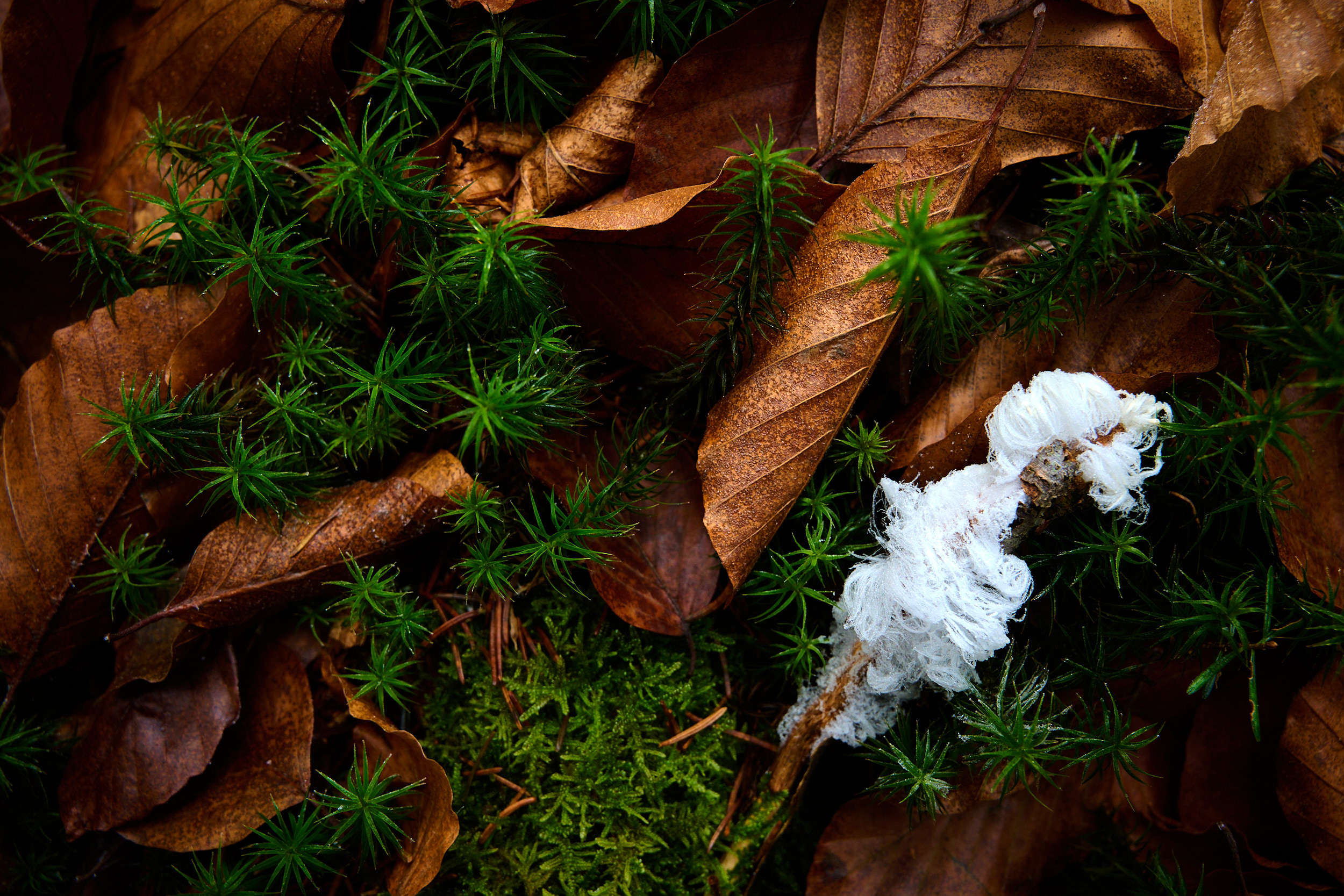
On foggy December mornings in the Bavarian Forest, the woods reveal their quietest secrets. This guide demonstrates how to find and photograph hair ice – a fleeting natural phenomenon that only occurs under specific conditions and demands the highest precision in macro photography. Includes practical tips on locations, equipment, and technique.

Julius Kramer
Wildlife Photographer & Conservationist
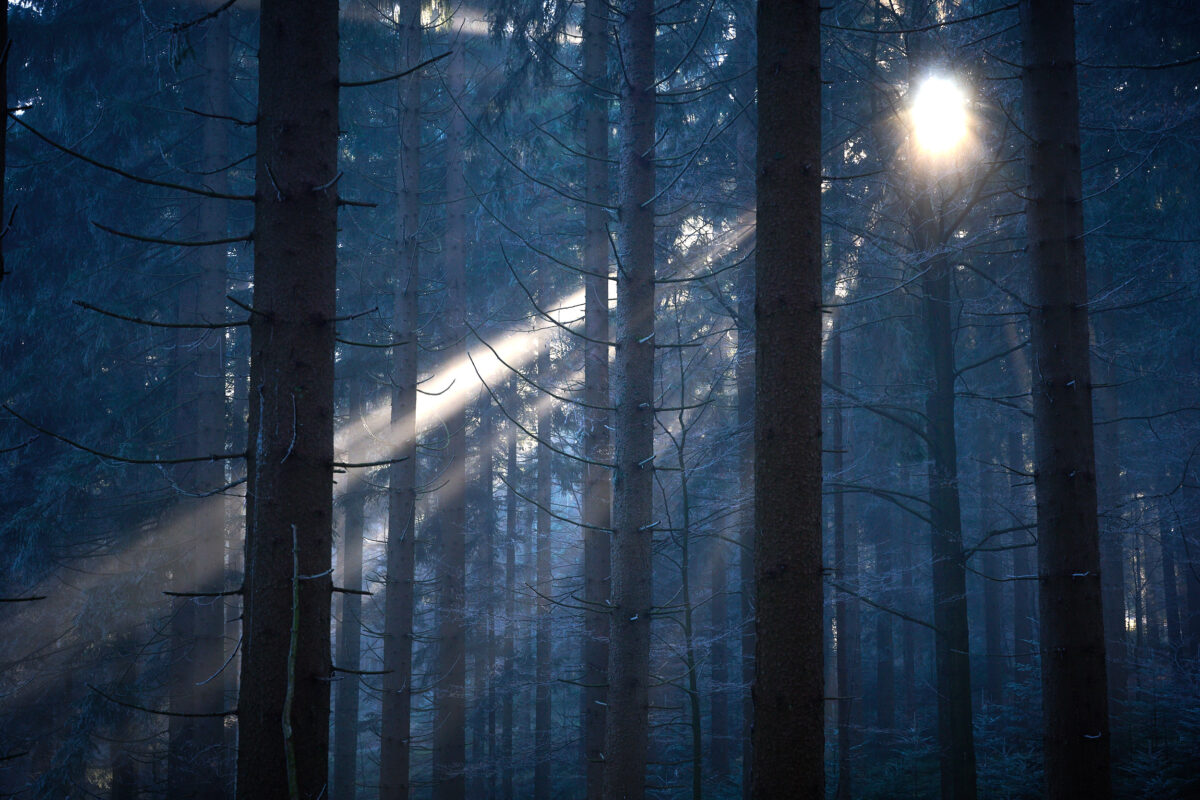
A December morning at around 800 meters in the Bavarian Forest often begins the same way: damp, cold, and silent. The forest lies beneath a thick blanket of fog, while the sun is already shining on the peaks above – a classic inversion morning. Down in the valley, a muted gray prevails, sounds are swallowed by the fog, and the world seems frozen. Above, however, the ridges stand out clearly against the sky, bathed in cold winter light.
For many, this is a good reason to stay in the warmth. For nature photographers, however, these are precisely the days when the forest reveals its quiet secrets – and with a bit of luck, one of its most fascinating: hair ice.
On such mornings, the obvious is missing: no spectacular distant views, no sunrise in flaming colors. Instead, the forest shows its subtle side. To find subjects here, one must slow down, lower one's gaze, and read the structures. The focus shifts from wide-angle to macro perspective, from panorama to detail.
And right there, on the forest floor between moss and deadwood, one of winter's most fleeting natural phenomena sometimes waits.
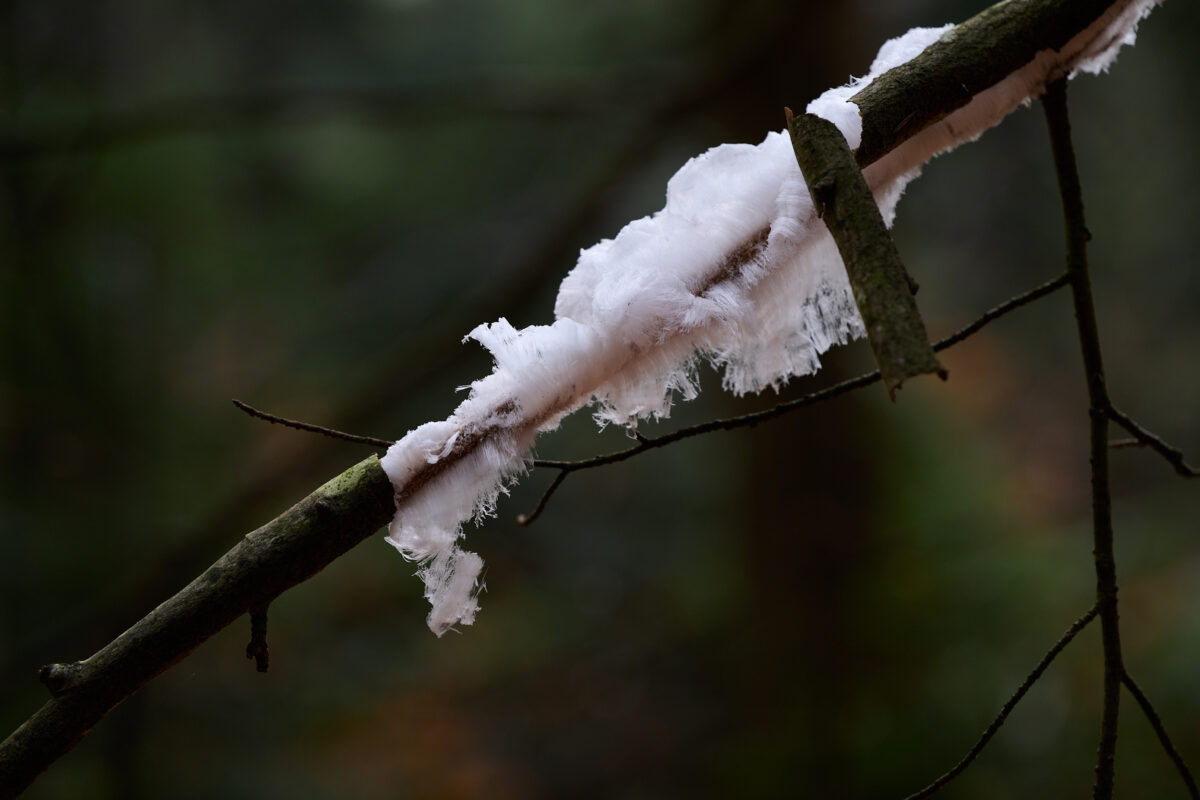
Hair ice is one of the inconspicuous yet most fascinating phenomena in winter nature photography. It forms only under very specific conditions: temperatures just below freezing, high humidity, absolute calm – and above all, decaying hardwood, ideally from beech or oak, that has been lying on the ground for at least a year.
The decisive factor is a specific fungus (Exidiopsis effusa) that lives in the wood and influences the freezing process so that the water does not freeze as a compact layer of ice, but is instead pushed out of the wood in millimeter-thin threads. These ice filaments grow slowly, often over several hours, maintaining an amazingly uniform structure. Biologically speaking, hair ice is an interplay of decomposition, moisture, and frost – photographically, it looks like pure magic.
The result resembles cotton candy or fine white hair wrapped around branches and wood remains. Yet, as playful as it looks, it is equally delicate: a ray of sunshine, a light breeze, or a step too close – and the fragile ice structure collapses. Hair ice is a temporary subject. Often, only a short window of a few hours remains, usually in the early morning. This is exactly what makes it so photographically appealing – and so uncompromising.
The best chances of finding hair ice are in the hours before and after sunrise, as long as temperatures remain below zero and the fog keeps the humidity high. As soon as the sun reaches the forest floor, the ice begins to melt.
Suitable locations include old beech trunks and thicker branches that have been lying on the ground for some time – recognizable by their dark-colored, decaying bark. Hair ice is often found on the underside of fallen branches or on the sides of stumps where moisture can rise from the ground. The fungus prefers hardwood, so the search is particularly worthwhile in mixed forest areas with old beech stands.
A practical tip: once you have found a spot with hair ice, you can often return there multiple times under the right weather conditions. The fungus remains active in the wood as long as substrate is available.
On this morning, I consciously kept my gaze on the ground. While the sun only reached the peaks of the Bavarian Forest, creating golden edges and almost kitschy light effects at the edge of the fog, a uniform, diffuse light prevailed within the forest itself. The fog acted as a natural diffuser – ideal conditions for macro photography without harsh shadows or blown-out highlights.
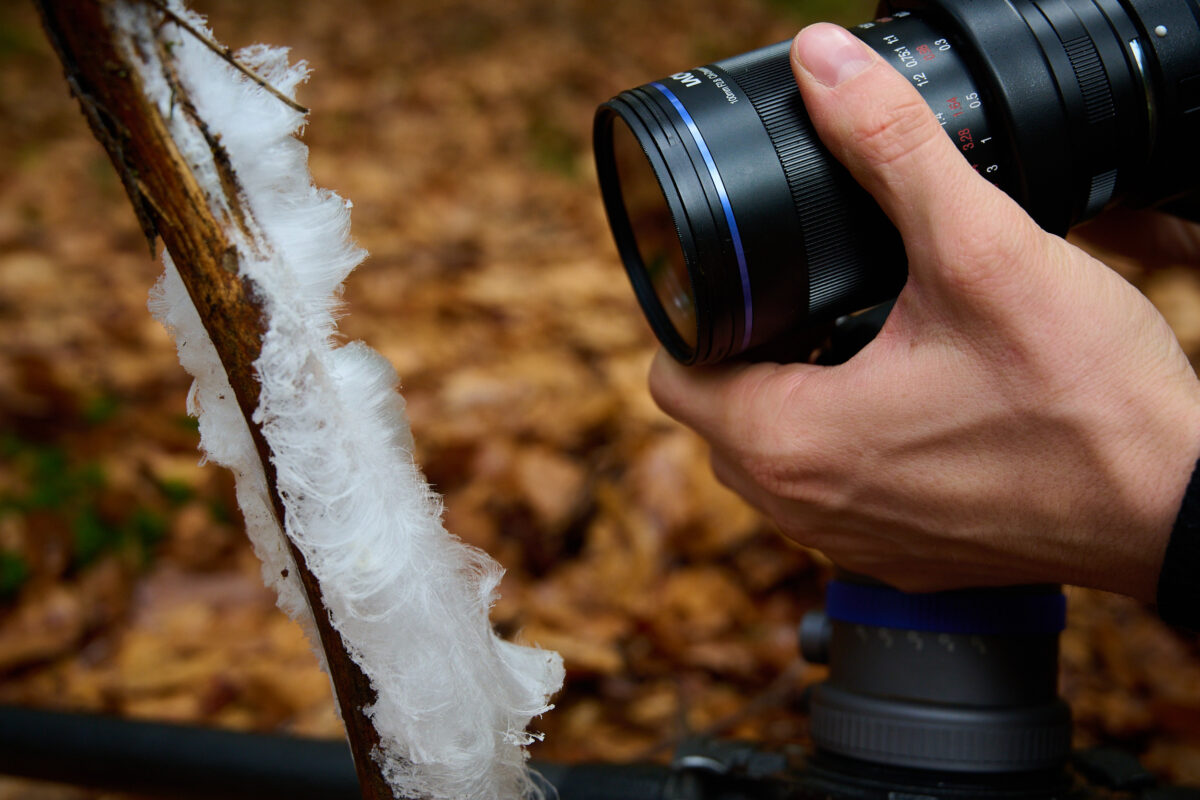
With the Nikon Z8 and the Laowa 100 mm Macro, the delicate structure of the hair ice could be precisely captured. A stable tripod is mandatory: low ISO values for maximum image quality, longer shutter speeds for sufficient exposure, and mirror lock-up or a self-timer to avoid any vibration. Precision is required for exposure – corrected slightly to the right so that the ice remains truly white and does not turn gray.
Manual focusing was essential, as just a few millimeters determine whether the ice filaments appear three-dimensional or flat. Small apertures provided sufficient depth of field without smothering the fine structure. At the same time, patience is required – not only when photographing but also when moving through the forest. Every step had to be placed deliberately to avoid causing any vibration that could cause the fragile ice to collapse.
A practical note: with significant temperature changes – such as moving from a warm car into the cold forest – the camera's front lens fogs up quickly. Ideally, allow the equipment to acclimate for a few minutes before you begin photographing.
The Nikon 24–70 mm f/4 was used for supplementary environmental shots. It helped to show the hair ice in the context of its habitat: old beech remains, moss-covered trunks, dark forest floor, and wisps of fog between the spruces. Nature photography in the Bavarian Forest thrives on this connection between detail and space, between biology and atmosphere.
Especially in winter, the Bavarian Forest shows its particular strength. Not through loud colors or dramatic landscapes, but through reduction. Fog, hoarfrost, ice, and silence form a stage for subjects that demand patience – and attention.
Hair ice is a perfect example: rare, inconspicuous, and biologically fascinating. It forces one to look closer and to understand the forest not just as a backdrop, but as a living system in which even decomposition and transience become aesthetic.
The photography of hair ice ideally combines macro photography, biology, and patience. It shows that nature photography does not have to be loud to have an impact. Especially on foggy winter mornings in the Bavarian Forest, when the sun only shines above the peaks, the quietest – and perhaps most honest – images are created.
Those who set out on such mornings need more than equipment: respect for nature, patience in dealing with fleeting phenomena, and a willingness to slow down. The hair ice will not wait for you. But when you find it, when the light is right and the camera stands still on the tripod, a connection is formed for a few moments between the photographer, the forest, and a touch of transience that can just barely be saved into the frame.
And sometimes, all it takes is a piece of decaying wood and the willingness to look down even in gray and cold conditions – to where the forest tells its quietest stories.

Experiences
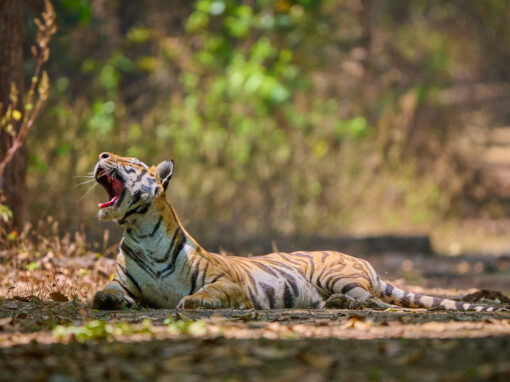
No phone ringing. No jeep traffic jams. No Instagram Reels. In India’s tiger reserves, rules are in place to protect the forest –
not to entertain tourists. An experience report from Kanha National Park on sustainable nature tourism, strict safari rules, and why Africa could learn from it.
Experiences
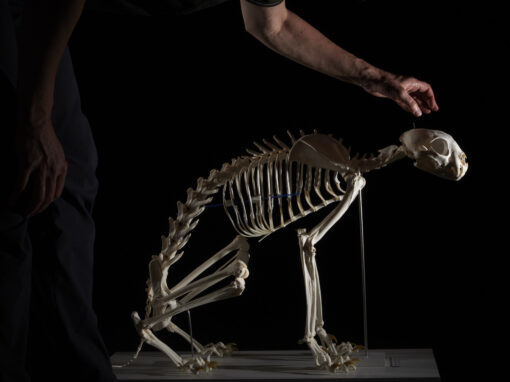
In Bavaria, at least 14 lynx disappeared under unexplained circumstances. Wildlife crime is not a distant problem—it happens in our forests. About poisoned baits, failing law enforcement, and the power of a single image.
Blog
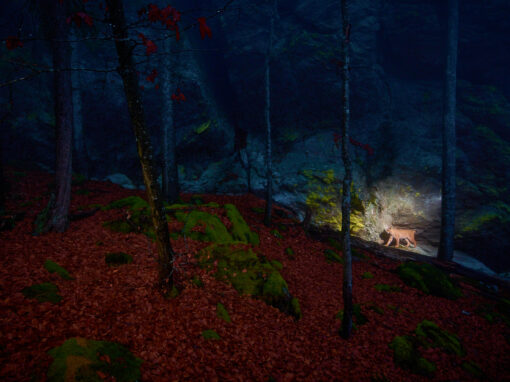
A male lynx roams his territory near Großer Arber in the November twilight—and wins the “The World of Mammals” category at Glanzlichter der Naturfotografie 2026. The story behind the image.
Experiences
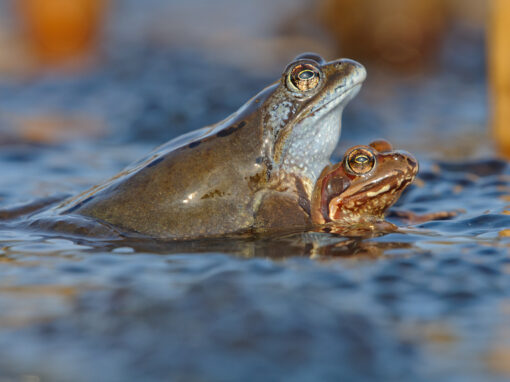
Hand on heart: who voluntarily lies flat in the forest mud during the day at three degrees and drizzling rain? While the world waits for the first cherry blossoms for the perfect Instagram selfie, I prefer to lie where it is brown, damp, and—well—quite uncomfortable. But right here, under the moldy leaves and in the inconspicuous ponds, the most exciting drama of early spring is currently unfolding.
Equipment
With long focal lengths, “sharpness” is not the problem; it is the tiny movement that prevents sharpness. The longer the focal length, the higher the sensor resolution, and the smaller the time window for correct technique, the less forgiving the system becomes. In practice, it is therefore not about the one perfect, razor-sharp image, but about yield: How many images in a sequence are truly usable, how reproducible is the result, and how quickly are you ready when the subject appears only briefly?
Experiences
Florida’s winter is peak season for bird photography. In the Everglades, Lake Apopka, the Ding Darling Reserve and Crystal River, migratory birds meet resident species. Herons, pelicans and ibises shape the wetlands—at the center is the osprey. This article shows why Florida is one of the best winter destinations for wildlife photography and how light, landscape and biodiversity work together.
Join my nature photography community and receive exclusive updates directly in your inbox.

Sign up for my newsletter now and be the first to receive exclusive insights, tips, and new dates.