

No Results Found.
The page you requested could not be found. Try refining your search, or use the navigation above to locate the post.
The page you requested could not be found. Try refining your search, or use the navigation above to locate the post.
$variable({u0022typeu0022:u0022contentu0022,u0022valueu0022:{u0022nameu0022:u0022loop_menu_descriptionu0022,u0022settingsu0022:{u0022beforeu0022:u0022u0022,u0022afteru0022:u0022u0022,u0022loop_positionu0022:u0022u0022}}})$
$variable({u0022typeu0022:u0022contentu0022,u0022valueu0022:{u0022nameu0022:u0022loop_menu_descriptionu0022,u0022settingsu0022:{u0022beforeu0022:u0022u0022,u0022afteru0022:u0022u0022,u0022loop_positionu0022:u0022u0022}}})$
$variable({u0022typeu0022:u0022contentu0022,u0022valueu0022:{u0022nameu0022:u0022loop_menu_descriptionu0022,u0022settingsu0022:{u0022beforeu0022:u0022u0022,u0022afteru0022:u0022u0022,u0022loop_positionu0022:u0022u0022}}})$

- 28. November 2025
There are countless lenses: long, short, small, large, expensive, and affordable. But which lenses do you truly need for nature photography? An article about different focal lengths and their applications.

Julius Kramer
Wildlife Photographer & Conservationist
A high-quality lens for nature photography actually has a greater impact on image quality than the camera itself. In my opinion, the importance of the camera is generally overestimated, as comparable models differ only in nuances regarding image quality.
When discussing nature and wildlife photography equipment, we usually need a long focal length for wild animals in their natural habitat – at least 300mm, preferably 400-800mm. For landscape photography, however, wide-angle lenses like 16-35mm and medium telephoto lenses like 70-200mm are particularly suitable. The crop factor of smaller sensors acts as a focal length extender, which can be particularly advantageous for wildlife photography. Furthermore, the minimum focusing distance is extremely important when choosing the right lens for wildlife photography.
In this article, I want to provide some tips on which lenses for nature photography are suitable for different situations, how prime lenses differ from zoom lenses, and what to look for when buying. After all, the best telephoto lenses for wildlife photographers can cost between €1,000 and €15,000 – an investment that requires careful consideration.
Choosing the right lens significantly determines the success of your nature photos. Unlike camera selection, where differences are often minimal, the appropriate lens can make an enormous difference. Especially in nature photography, there is no "universal lens" that covers all areas – from macro shots of tiny insects to shy wildlife in the distance.
Opinions differ widely when deciding between zoom and prime lenses. Zoom lenses offer enormous flexibility – you can quickly switch between different focal lengths without having to change the lens. This is particularly advantageous when animals move quickly or when you are photographing in locations where changing lenses would be impractical.
Prime lenses, however, excel in other qualities:
Many nature photographers report that their enthusiasm truly ignites when shooting with prime lenses. Only in practice does one realize how many creative possibilities are lost with slow zoom lenses.
Nevertheless, modern high-end zoom lenses are now so good that the classic advantages of prime lenses are partially blurring. In terms of sharpness, detail, and image quality, many of the newer zoom lenses for mirrorless cameras are almost perfect.
Despite this, three crucial advantages remain for prime lenses: the specific image look, the effective focal length at close range, and, above all, the higher aperture with better bokeh.
The size of the sensor in your camera directly influences which lenses you can effectively use. The term "crop factor" describes the ratio of the sensor size to classic full-frame (36 x 24 mm).
The sensor of an APS-C camera is smaller than a full-frame sensor and only captures a section of the image circle produced by a lens. This section acts like a magnification of the subject, although the focal length does not physically change.
If you use a 50mm lens on an APS-C camera with a crop factor of 1.5, the image section corresponds approximately to that of a 75mm lens on a full-frame camera (50 × 1.5 = 75). With a Micro Four Thirds system with a crop factor of 2.0, it would even be 100mm.
This effect can be very advantageous in wildlife photography. A 300mm telephoto lens on an APS-C camera provides the same "reach" as a 450mm lens on a full-frame camera – ideal for shy animals that cannot be approached closely enough.
However, the crop factor also influences the image effect, especially the depth of field. Smaller sensors deliver more depth of field at the same aperture and image section, making it more difficult to create a soft, blurred background (bokeh).
Incidentally, a smaller sensor also leads to higher image noise at the same ISO setting – because simply fewer photons reach the surface. The noise performance of a Micro Four Thirds camera at ISO 800 corresponds approximately to that of a full-frame camera at ISO 3200. You should consider this when choosing your equipment for low-light situations.
The aperture of a lens is indicated by the maximum aperture opening – the lower the f-number, the faster the lens. A lens with f/1.4 lets four times more light onto the sensor than one with f/2.8.
Generally, lenses that can be opened to f/2.8 or wider are considered fast. These offer crucial advantages in nature photography:
Firstly, they enable faster shutter speeds at the same ISO sensitivity, which is critical, especially in wildlife photography. Each full f-stop doubles the amount of light falling on the sensor. In low light conditions in the morning or evening – often the best times for wildlife observation – a fast lens can make the difference between a blurry and a sharp image.
Secondly, a wide aperture offers more creative control over the depth of field. With f-numbers of f/1.8 or f/1.4, you can reduce the depth of field so much that only your main subject is sharply rendered, and the foreground and background remain pleasantly blurred.
Thirdly, fast lenses often have better image quality because their entire optical construction is optimized for high imaging performance. Even if you stop them down slightly (e.g., to f/4 or f/5.6), they often deliver sharper results than slower lenses.
However, high aperture usually means paying more and accepting heavier lenses. Especially with long focal lengths, fast lenses quickly become very expensive and heavy.
For most landscape shots, extreme aperture is rarely needed, as one typically photographs at f/8 to f/16 anyway to achieve sharpness from front to back. An exception is night photography – for shots of the starry sky and the Milky Way, lenses with f/1.8 or preferably f/1.4 are ideal.
Ultimately, there is no "right" or "wrong" lens for nature photography – it's about choosing the lens that best suits your photography style, needs, and budget.
Landscape photography opens up fascinating perspectives on the wonders of nature, and the choice of the right lens is crucial for the visual impression. While many immediately think of wide-angle shots, every focal length range actually offers unique creative possibilities to capture the beauty of a landscape.
Wide-angle lenses are classic companions for landscape photographers. With their wide angle of view, they are very expressive and allow you to capture expansive scenes while emphasizing depth and vastness – two central design elements in landscape photography.
At a focal length of 14mm, the angle of view is approximately 114 degrees compared to 108 degrees at 16mm – a small numerical difference, but a noticeable practical difference. Viewed across the image horizontal, it's the difference between 104 and 98 degrees, which is particularly significant for wide panoramas.
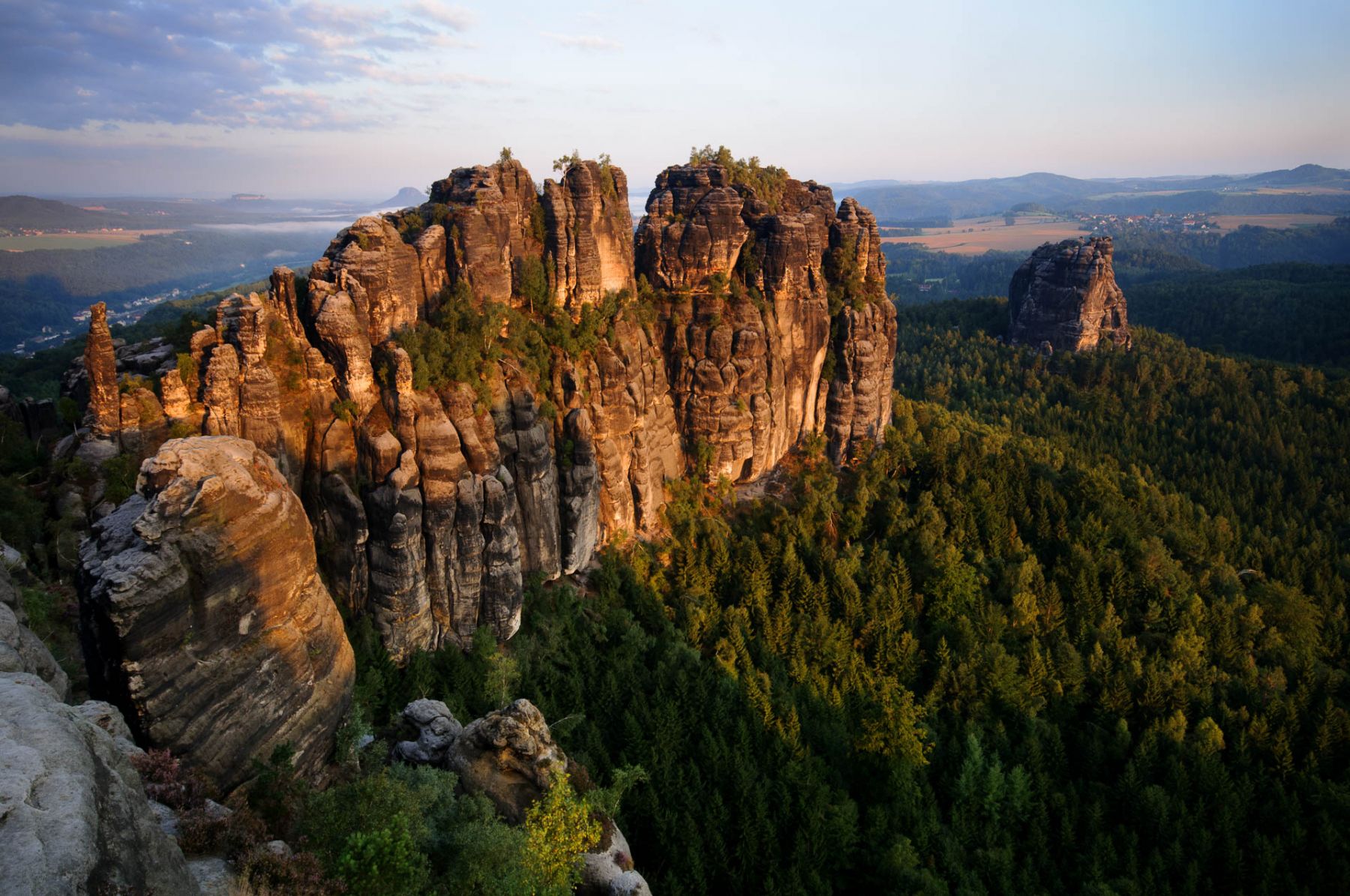
The shortest focal lengths between 10 and 20mm (for APS-C) or 14 and 24mm (for full-frame) are excellent for:
However, it should be noted that extreme wide-angle shots can also lead to distortions. Especially at the edge of the image, straight lines can appear curved, and vertical elements like trees or buildings often lean towards the center of the image – the notorious effect of "converging verticals."
For optimal depth of field, wide-angle lenses are usually used with apertures between f/11 and f/16, allowing you to render everything sharply from near foreground objects to the distant horizon.
The 24-70mm focal length range is not called a "walk-around lens" for nothing – it covers a versatile range from slight wide-angle to slight telephoto and is suitable for numerous landscape situations.
A 24-70mm lens is particularly valuable for landscape photography when:
With a standard zoom, you can capture wide landscapes as well as smaller scenes or details. Especially at medium focal lengths around 35-50mm, the angle of view corresponds approximately to human vision, resulting in particularly natural-looking images.
Most high-quality standard zooms are available in two variants: with a constant aperture of f/2.8 or as a lighter f/4 version. For classic landscape photography, the f/4 version is usually perfectly sufficient, as one often photographs with apertures between f/8 and f/11 anyway. Weight differences can be considerable – modern f/4 standard zooms sometimes weigh only about 540g, while the faster f/2.8 versions often weigh over 800g.
An interesting aspect of modern standard zooms is the improved minimum focusing distance. High-quality models allow shots from only 24-33cm away, which enables almost macro-like shots of blossoms or structures in nature.
Contrary to popular belief, telephoto lenses also have their firm place in landscape photography. With focal lengths from 70mm, especially in the 70-200mm range, wonderful landscape sections can be composed.
The particular strengths of telephoto lenses in landscape photography are:
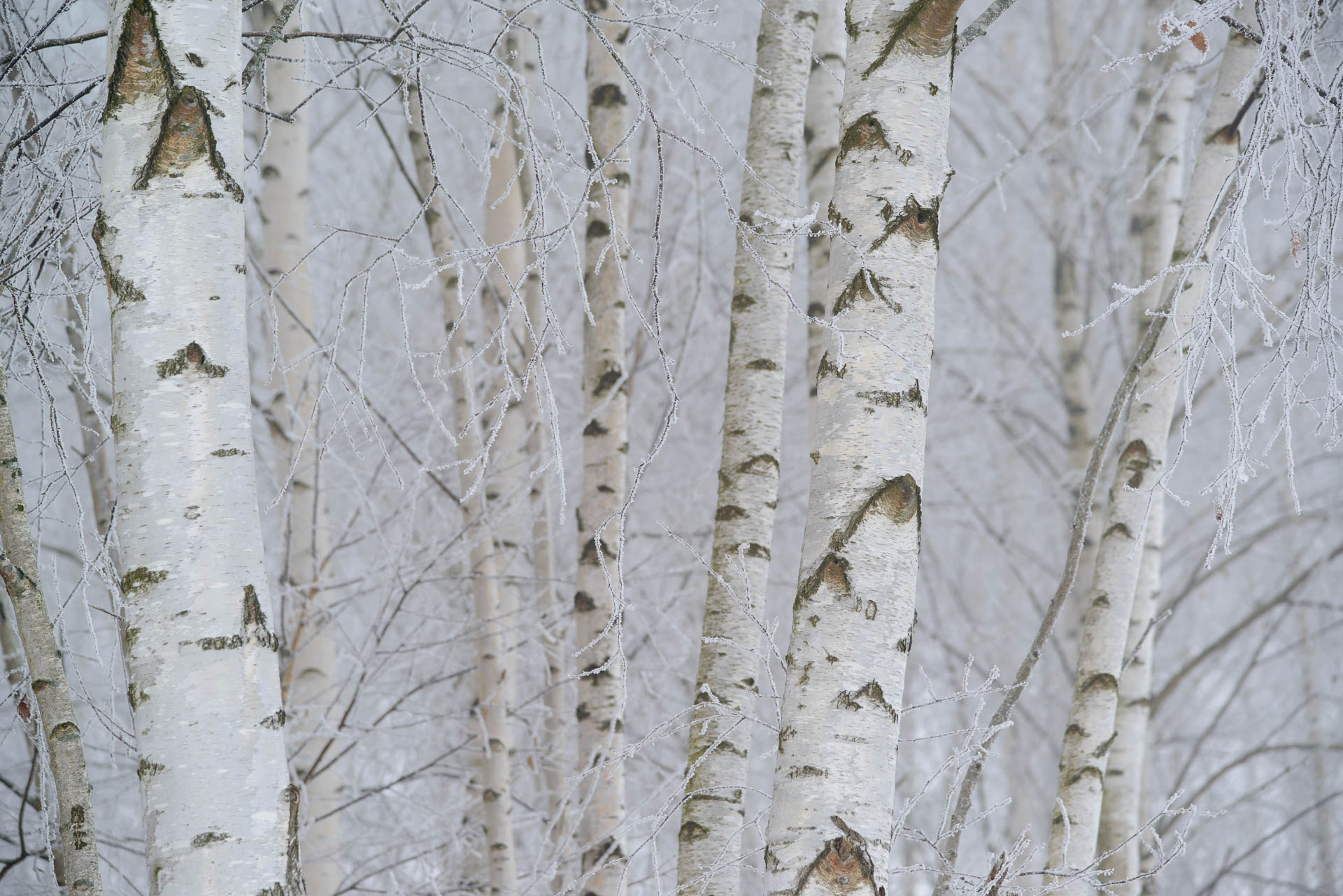
The compression effect is a particularly appealing creative tool. With longer focal lengths, elements in the foreground and background appear to move closer together. In landscapes with multiple layers – such as mountain ranges or hilly landscapes – this creates a fascinating image composition with a condensed perspective.
Additionally, telephoto lenses offer the advantage of a shallower depth of field, allowing individual landscape elements to be isolated from the background. A single tree, a rock formation, or a lighthouse in the distance can thus be staged particularly impressively.
For many landscape photographers, in addition to the classic 70-200mm zooms, longer focal lengths of 100-400mm are also interesting. These allow capturing distant details such as mountain peaks, light spots on distant rocks, or special weather phenomena.
Especially at viewpoints, coastal landscapes, or in mountainous regions where one's own position is often not freely selectable, telephoto lenses open up completely new creative possibilities for landscape photography.
For many nature photographers, wildlife photography is a particular challenge – especially because the distance to the subject is rarely freely selectable. A telephoto lens therefore becomes an indispensable tool when shy animals are to be photographed from a respectful distance, without startling or endangering them.
For wildlife photography, a minimum focal length of 200mm is recommended to bring animals sufficiently close. Depending on the species and desired image composition, however, 300mm or more is often required. Longer focal lengths not only allow photography from a safe distance but also blur the background more, thereby highlighting the animal better.
The choice of the appropriate focal length depends on various factors: the size of the animal, the distance, and the desired image section. While focal lengths of 300-400mm may be sufficient for less shy animals like birds or squirrels, focal lengths between 400-600mm are often recommended for shyer animals like deer.
However, the longer the focal length, the higher the risk of camera shake. Therefore, a stabilization aid such as a tripod or a beanbag is recommended for long focal lengths.
In wildlife photography, the question often arises: zoom lens or prime lens? Both have their specific advantages and disadvantages.
Zoom lenses offer enormous flexibility. Especially when you are on the go and don't know exactly what distance or what animals you will encounter, zooms provide the necessary adaptability. A deer suddenly emerges from the forest? With a zoom, you can react quickly and adjust the focal length without having to change the lens.
Prime lenses, on the other hand, impress with their superior image quality, faster autofocus, and higher aperture. They deliver significantly better results, especially in challenging lighting conditions in the morning or evening – often the best times for wildlife observations.
Another aspect: with prime lenses, isolating subjects is usually more successful. The image look is characteristic, as both foreground and background appear much more blurred than with zoom lenses of similar focal length.
Lenses with 70-200mm and an aperture of 1:2.8 are part of the standard equipment for many wildlife photographers. These telephoto zoom lenses are excellent investments, particularly due to their versatility, good build quality, and comparatively high image sharpness.
A 70-200mm is ideal for:
The constant f/2.8 maximum aperture allows shooting at low ISO settings with fast shutter speeds. Furthermore, the exposure time remains constant across different focal lengths, which significantly simplifies handling.
From 300mm onwards, wildlife photography truly becomes enjoyable. This focal length already offers sufficient "reach" for many medium to large animals and is excellent for stalking, as the lens is still comparatively light and manageable.
With a 300mm lens, shy forest dwellers such as deer, foxes, or badgers can also be captured well. Especially with a wide maximum aperture of f/4 or better, this focal length already allows for excellent isolation of the main subject from the background.
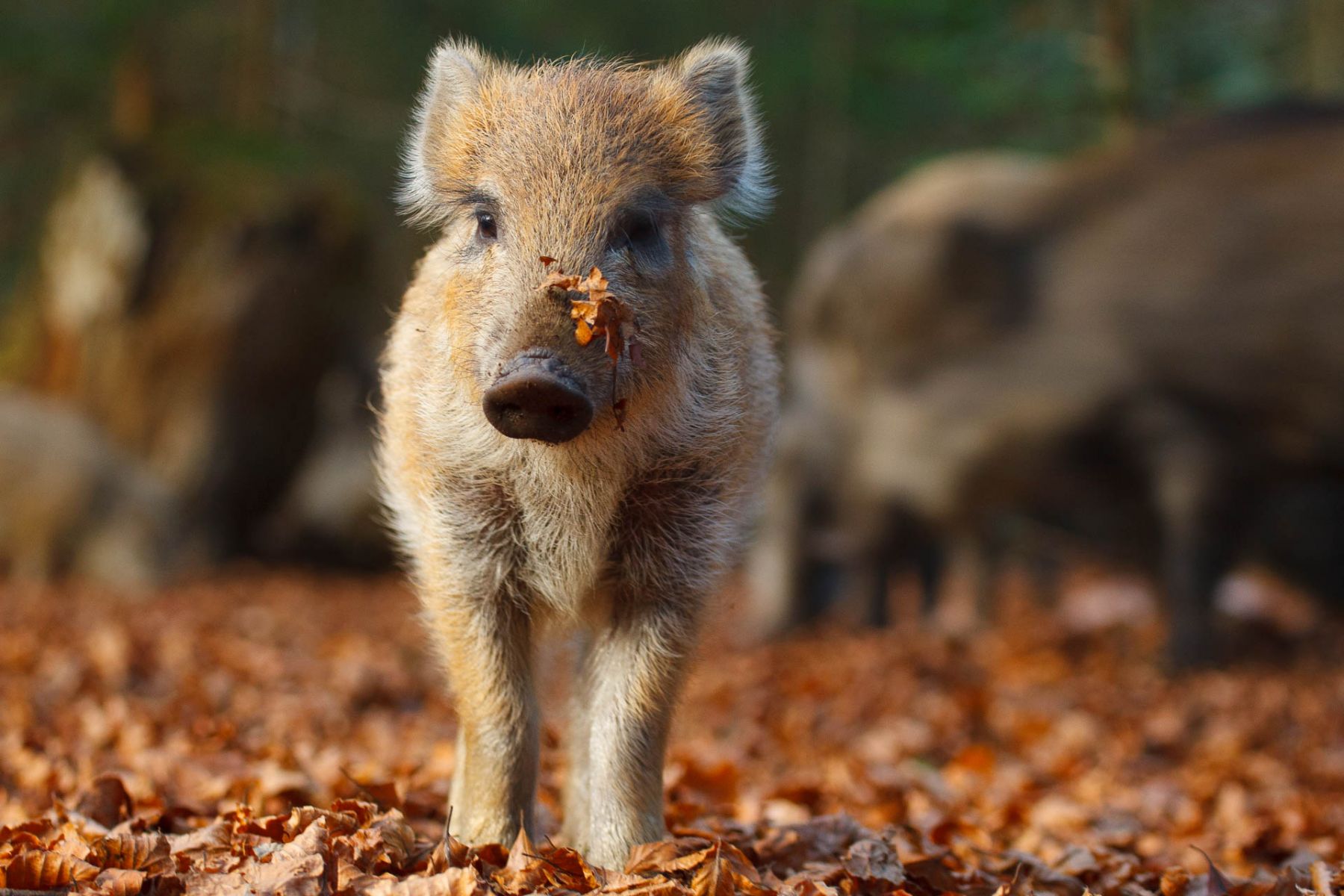
Modern 300mm lenses also offer a comparatively short minimum focusing distance, making them more versatile. Some models allow shots from only 1.4 meters away with a respectable magnification ratio, which is also sufficient for larger insects or plant details.
For serious bird photography or very shy wildlife, focal lengths of 500-600mm are almost indispensable. These super telephoto lenses enable frame-filling shots from a great distance.
The decisive advantage of these long focal lengths is not only the high magnification but also the impressive isolation of the subject. At wide open aperture, the blur circles of such prime lenses are almost twice as large compared to a zoom, creating an unmistakable "super telephoto look." Due to the narrower image section, simply less background is visible in the image, and it is correspondingly easier to keep it calm.
However, these focal lengths also bring challenges: the heavy weight (often 3 kg or more) usually requires a stable tripod or at least a monopod. Moreover, camera shake is significantly more visible at these focal lengths, which is why a good image stabilizer or fast shutter speeds are crucial.
If you don't want to invest in an expensive super telephoto right away, you can start by experimenting with zoom lenses like 180-600mm or 200-500mm. These offer good flexibility with acceptable image quality, although the lower aperture (mostly f/5.6-6.3) represents the biggest disadvantage.
The fascinating world of macro photography allows us to discover small details of nature that are barely perceptible to the naked eye. In this field, the goal is to impressively magnify miniature subjects such as insects, flowers, or dewdrops and reveal their hidden beauty.
For true macro photography, we need special equipment, with two main solutions available: dedicated macro lenses or extension tubes for existing lenses.
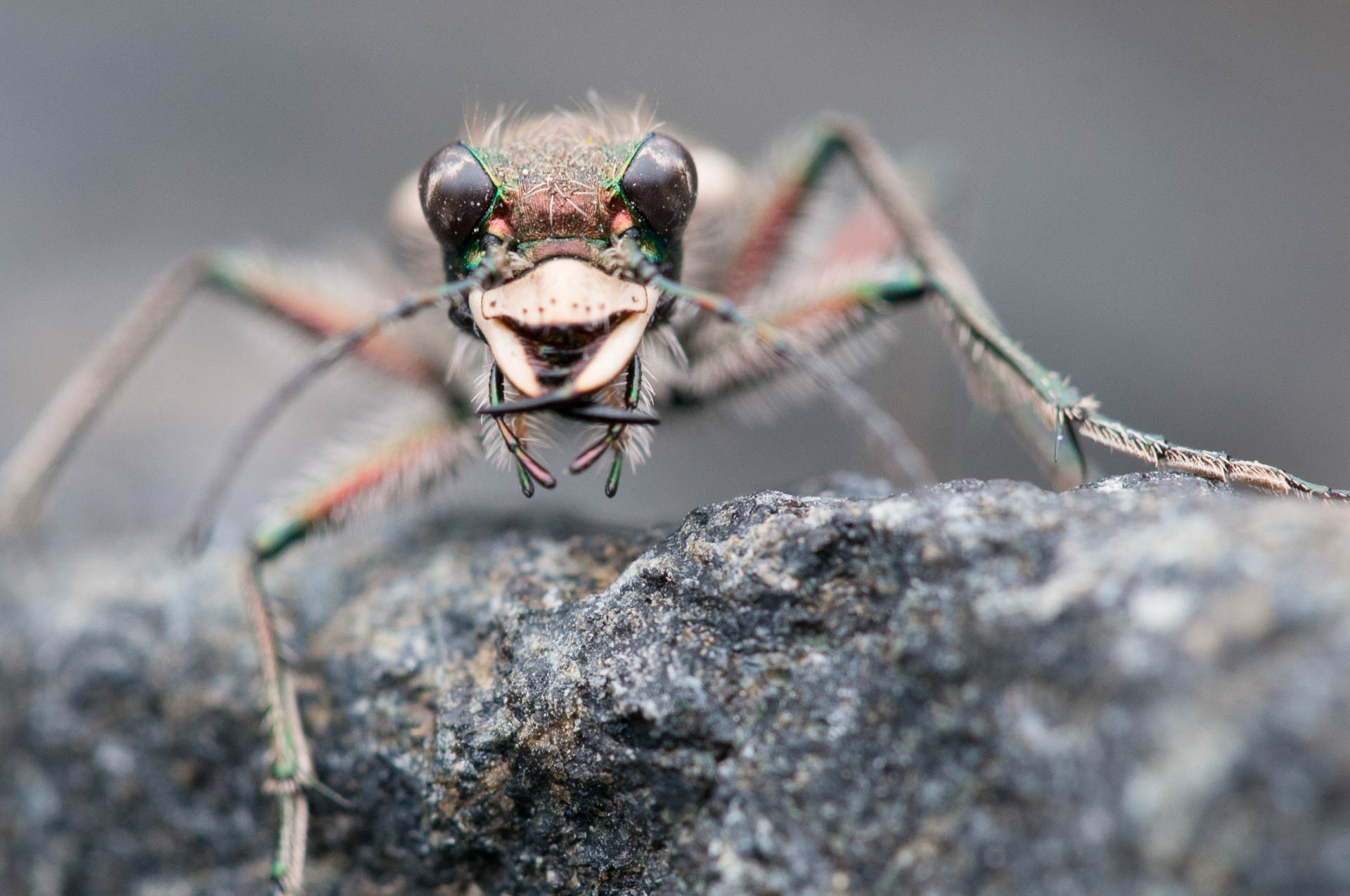
True macro lenses are specifically designed for close-up shots and typically achieve a magnification ratio of 1:1, meaning the subject is rendered life-size on the sensor. A 3 cm butterfly will then appear 3 cm large on the sensor. These lenses deliver excellent optical quality at close range, as their entire construction is optimized for this purpose.
Extension tubes, on the other hand, are a more affordable alternative. These tubes are mounted between the camera body and the lens, thereby increasing the flange focal distance. The crucial advantage: since extension tubes contain no optical elements, they do not negatively affect image quality. However, light intensity is lost due to the longer light path, which requires higher ISO values or longer exposure times.
Particularly interesting: with extension tubes, you can use your existing lenses for macro photography. Nevertheless, you should note that the optical quality of normal lenses with extension tubes cannot always match that of a true macro lens. For magnification ratios up to approximately 1:1, extension tubes are still a convincingly good solution.
Two technical terms are crucial for macro photography: minimum focusing distance and magnification ratio.
The minimum focusing distance describes the shortest possible distance between the sensor plane and the subject at which a lens can still focus. This limit is not measured from the front lens of the objective, but from the sensor plane, which is marked on many cameras with the symbol Ø. A macro lens with a minimum focusing distance of 30 cm, which itself is 14 cm long, thus allows a minimum distance of about 16 cm between the front lens and the subject.
The magnification ratio, on the other hand, indicates the size relationship between the real subject and its image on the sensor. At a ratio of 1:1 (sometimes referred to as 1×), the subject is rendered at its original size. At 1:2, it appears half as large; at 2:1, twice as large. Macro photography typically operates in the range between 1:10 and 10:1 – beyond that begins microphotography.
Important to understand: the closer you get to a subject and the greater the magnification ratio becomes, the dramatically shallower the depth of field. This is one of the biggest challenges in macro photography and often requires strong stopping down or techniques like focus stacking.
Macro lenses are typically offered in three focal length ranges, each providing different advantages:
Short macro lenses (50-60 mm) are the most compact and lightest options. Due to their short focal length, however, you have to get very close to the subject, which can be problematic with shy insects. These lenses are excellent for static subjects such as flowers, mushrooms, or product photography. Another advantage: they are usually the most affordable entry-level options for macro photography.
Medium macro lenses (90-105 mm) offer a balanced compromise between working distance and portability. With a working distance of about 30-35 cm, even sensitive or moving subjects like butterflies and small insects can be photographed well. This focal length is considered a classic for getting started in macro photography and can also be excellently used for portraits.
Long macro lenses (150-180 mm) allow the greatest working distance to the subject, which is particularly advantageous for shy animals. With these lenses, you can take frame-filling shots of small animals from a safe distance without entering their "flight distance." The disadvantage: these optics are significantly heavier, more expensive, and often only practical to use with a tripod. The longer focal length also creates a shallower depth of field, which requires precise focusing.
For beginners in nature photography, a 100mm macro lens is initially recommended as the most versatile solution. However, those who primarily want to photograph small, shy animals should opt for longer focal lengths right away. The shorter 50-60mm options, on the other hand, are ideal for controlled situations or when weight and mobility are particularly important.
Regardless of the chosen focal length, the rule is: good macro lenses achieve at least a magnification ratio of 1:1, while normal lenses typically only manage 1:7 to 1:9.
Buying a lens for nature photography is a significant investment that requires careful consideration. After all, it's not just about substantial financial resources, but about equipment that may accompany you for many years. Unlike camera bodies, which are often replaced by newer models with better sensors after a few years, high-quality lenses remain relevant and retain their value significantly longer.
When buying a lens, you should first honestly define your budget. While a 70-200mm zoom already costs between 800 and 1,500 Euros, super telephoto lenses with 500mm or 600mm focal length can quickly reach the price of a small car. A realistic budget helps you avoid disappointment.
However, remember: the most expensive lens is not automatically the best for your needs. For beginners in landscape photography, a good wide-angle lens (14-35mm) or a standard zoom (24-70mm) is often sufficient, while ambitious wildlife photographers should invest in at least a 300mm or 400mm telephoto lens.
If you have a limited budget, prioritize a lens that matches your main interest first, rather than buying several mediocre ones. A high-quality 150-600mm zoom, for example, can be more versatile than separate but lower-quality lenses for different focal length ranges.
The used market offers an excellent opportunity to acquire high-quality lenses at significantly lower prices. Thanks to robust construction and protective coatings, used lenses still deliver first-class results even after years. Particularly interesting: a used professional lens often offers better image quality than a new entry-level model at the same price.
When buying used, you have two options:
When buying privately, pay particular attention to the lenses (no scratches or fungus) and be sure to test autofocus and image stabilizer. Also, avoid suspiciously cheap offers, which are often fraud attempts.
An interesting alternative to buying is renting lenses. For special projects or rare uses, you can rent professional equipment on a daily basis – ideal for thoroughly testing a specific lens before buying or for a single safari without having to immediately invest in an expensive super telephoto.
Unlike camera bodies, which are replaced every few years by new models with better sensors, high-quality lenses can certainly be used for decades. Therefore, it is worth thinking long-term.
The following aspects make a lens future-proof:
Also, consider what your photographic journey might look like. Will you specialize more in landscape, macro, or wildlife photography in the future? For beginners, universal zooms like 24-105mm or 100-400mm, which cover various areas, are initially recommended. With growing experience and more specific demands, you can then specifically invest in specialized optics.
Choosing the right lens for nature photography may seem overwhelming at first, but the right equipment opens doors to extraordinary images. In fact, each focal length range offers unique creative possibilities – from dramatic wide-angle with 14-35mm for impressive landscapes to powerful super telephoto lenses with 500-600mm for shy wildlife.
For beginners, a versatile standard zoom between 24-70mm or a flexible telephoto zoom in the 70-200mm range is often sufficient. These already cover many situations and allow for initial experiments in various areas of nature photography. Later, equipment can be specifically supplemented – for example, with a true macro lens with 90-105mm for insects and flowers or a longer telephoto lens with 300mm for wildlife photography.
The principle here is: a defined budget should rather be invested in one high-quality lens than in several mediocre ones. Alternatively, the used market offers excellent opportunities to acquire professional optics at affordable prices. Those who are undecided can also rent lenses first before making larger investments.
Ultimately, it's not about owning every available lens, but about finding those that support your photographic style. Focal length alone does not make a great picture – the eye behind the camera remains crucial. Nevertheless, the right lens opens doors to photographic possibilities that would otherwise remain closed. Therefore, it is worth investing time in the selection and patiently building up your own equipment that perfectly suits your needs.

Experiences
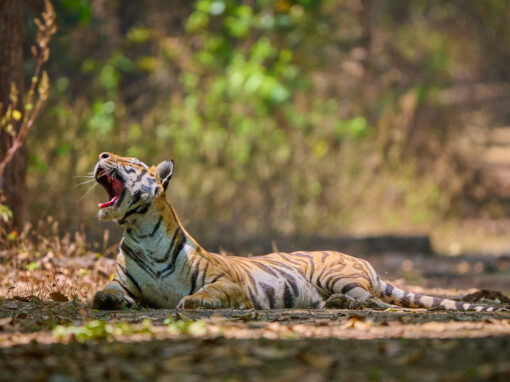
No phone ringing. No jeep traffic jams. No Instagram Reels. In India’s tiger reserves, rules are in place to protect the forest –
not to entertain tourists. An experience report from Kanha National Park on sustainable nature tourism, strict safari rules, and why Africa could learn from it.
Experiences
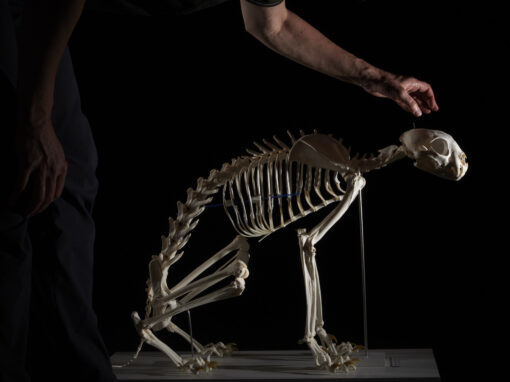
In Bavaria, at least 14 lynx disappeared under unexplained circumstances. Wildlife crime is not a distant problem—it happens in our forests. About poisoned baits, failing law enforcement, and the power of a single image.
Blog
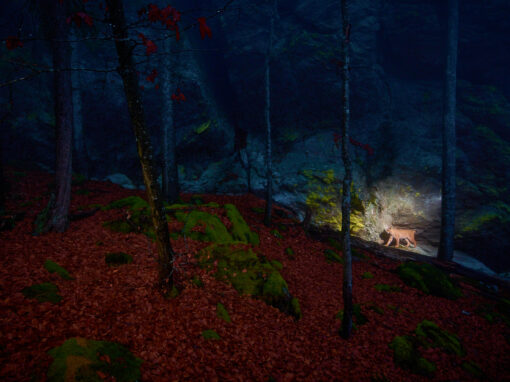
A male lynx roams his territory near Großer Arber in the November twilight—and wins the “The World of Mammals” category at Glanzlichter der Naturfotografie 2026. The story behind the image.
Experiences
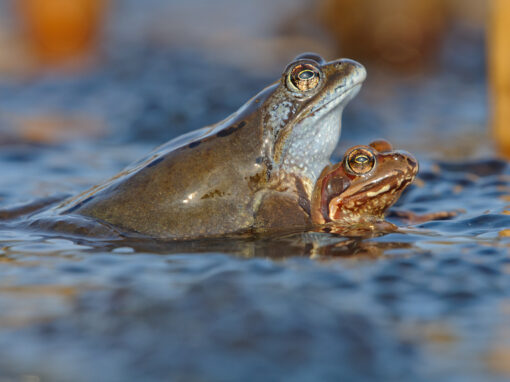
Hand on heart: who voluntarily lies flat in the forest mud during the day at three degrees and drizzling rain? While the world waits for the first cherry blossoms for the perfect Instagram selfie, I prefer to lie where it is brown, damp, and—well—quite uncomfortable. But right here, under the moldy leaves and in the inconspicuous ponds, the most exciting drama of early spring is currently unfolding.
Equipment
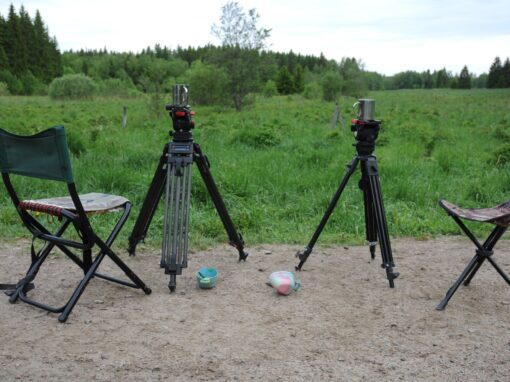
With long focal lengths, “sharpness” is not the problem; it is the tiny movement that prevents sharpness. The longer the focal length, the higher the sensor resolution, and the smaller the time window for correct technique, the less forgiving the system becomes. In practice, it is therefore not about the one perfect, razor-sharp image, but about yield: How many images in a sequence are truly usable, how reproducible is the result, and how quickly are you ready when the subject appears only briefly?
Experiences
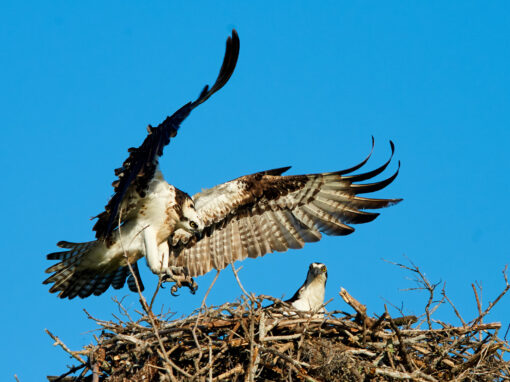
Florida’s winter is peak season for bird photography. In the Everglades, Lake Apopka, the Ding Darling Reserve and Crystal River, migratory birds meet resident species. Herons, pelicans and ibises shape the wetlands—at the center is the osprey. This article shows why Florida is one of the best winter destinations for wildlife photography and how light, landscape and biodiversity work together.
Join my nature photography community and receive exclusive updates directly in your inbox.

Sign up for my newsletter now and be the first to receive exclusive insights, tips, and new dates.